Weekly Stock Recap: AI Sell-Off and Market Correction
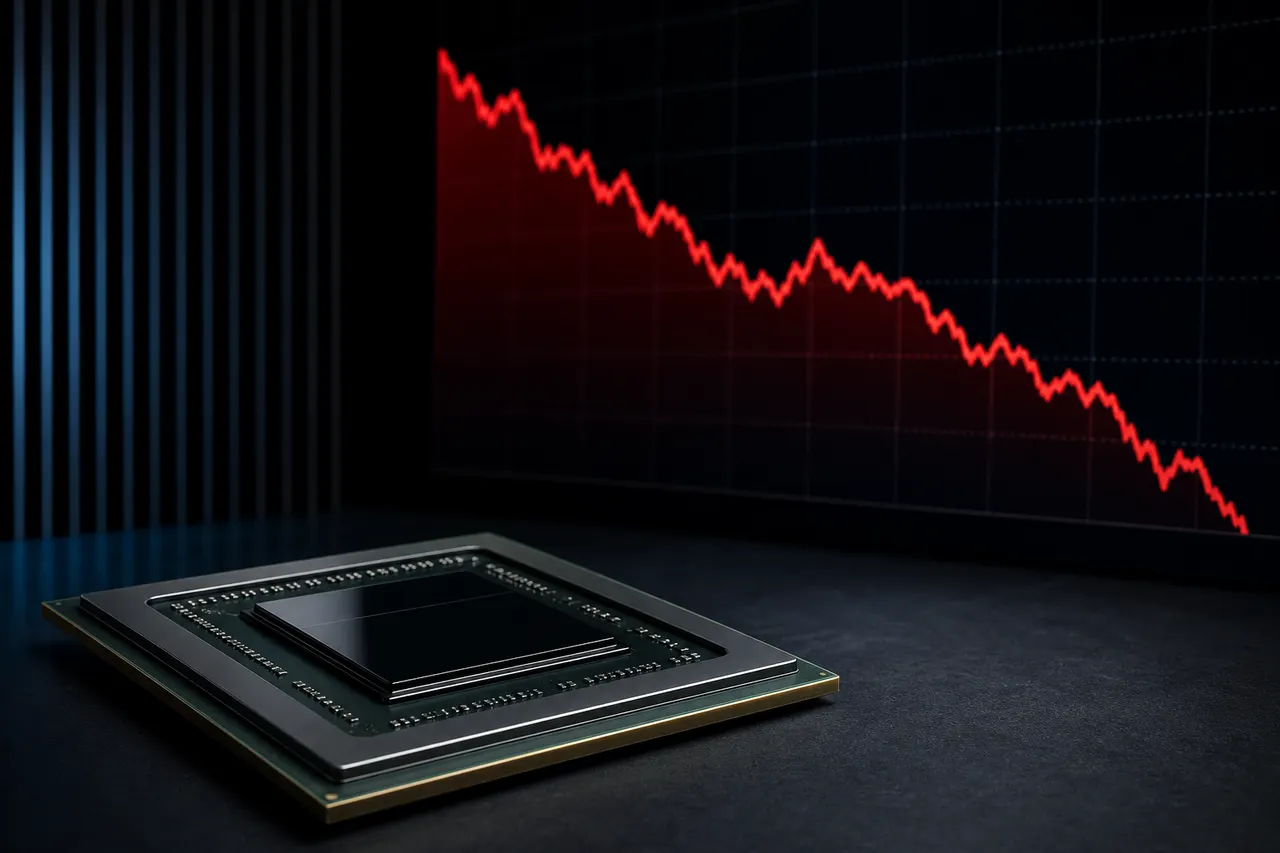
Nvidia's results and the Anthropic IPO failed to stop the AI sell-off. The SOX chip index plunged while the S&P 500 and DAX slid into correction. This recap sorts out the five trading days.
Key takeaways
- The sell-off in AI stocks spread to the broader market this week.
- The SOX chip index lost 7.9 percent on Friday, Nvidia fell 6.7 percent.
- The DAX dropped almost 8 percent within a week of its record at 27,001 points.
It was a week to forget for German investors. The DAX hit a record high of 27,001 points on November 12 and by Thursday, at 25,463, it stood more than 1,500 points lower. After Friday, Finanzmarktwelt puts the decline at almost 8 percent. The trigger sits in the US: according to AP, the S&P 500 closed down 3.7 percent on Friday, and the Nasdaq Composite is now negative for 2026.
The domino effect from Wall Street to Seoul
Tech stocks were hit first, then everything else. On Thursday the S&P 500, Dow Jones and Nasdaq 100 lost between 2.02 and 2.21 percent. Of 502 S&P stocks tracked, 464 closed lower, and in the Dow only Chevron held out. On Friday the sell-off accelerated: according to Finanzmarktwelt, the S&P 500 is ten percent below its October record and the Nasdaq 100 about 15.5 percent below its October 6 high.
In Asia, the Kospi fell 5.21 percent and the Nikkei 5.06 percent. At the same time, investors sought shelter in government bonds: the US ten-year yield slid from 5.18 to 4.94 percent within seven days.
Two hopes with no effect
Two events were meant to support AI optimism this week. Nvidia (NVDA) delivered strong results with high revenue and profit growth. Anthropic priced its shares at 83 US dollars, and according to Finanzmarktwelt demand exceeded supply sevenfold. The stock jumped to 111.50 dollars at its first trade and closed the first day at 97.17 dollars.
On Friday the stock gave up another 10.41 percent and traded at 87.07 dollars. Claudio Kummerfeld reads this as a signal: even fresh capital and a debut of this size do not slow the slide, because investors doubt that AI business models can sustain themselves.
Chip stocks under forced-selling pressure
The semiconductor sector did the most damage. The Philadelphia Semiconductor Index (SOX) lost 7.9 percent on Friday. Micron slumped 12 percent, and the so-called neoclouds CoreWeave and Nebius fell 10.8 and 11.3 percent. According to Stefan Jäger, Intel trades 61 percent below its yearly high and the SOX as a whole about 36 percent below its record.
Another trigger came on Thursday: Hunterbrook Capital publicly bet against AMD, pointing to a risky dependence on its China business. The stock lost 7.72 percent. Kummerfeld explains how fast losses grow with a classic chain reaction of stop-loss orders, margin calls and short selling.
Bottom or dotcom repeat?
Strategists disagree on the interpretation. Dario Perkins of TS Lombard sees parallels to the summer of 2000, when the broad market followed the Nasdaq crash only with a delay. Concentration makes it worse: technology now makes up over 40 percent of the S&P 500, versus about 35 percent at the dotcom peak.
Valuation argues against that. According to Bloomberg, the SOX forward price-to-earnings ratio is down to about 15, relative to the S&P 500 as low as last seen in 2018. Ed Yardeni sees the correction as a buying opportunity and carries an S&P 500 target of 7,900 points, and Louis Navellier expects a sharp rebound in AI stocks. Keep in mind that chipmakers are cyclical, and seemingly cheap valuations can be deceptive at earnings peaks.
What momentum says
Trading Department's momentum signal shows a bearish state for Nvidia (NVDA), at a price of 125.53 US dollars, on both the daily (1D) and weekly (1W) timeframes. No data is available for the shorter timeframes on stocks. The momentum signals that downward pressure on the most important AI stock remains intact on both timeframes.
Scenarios
If the DAX keeps falling, Finanzmarktwelt sees the round mark of 25,000 points coming into focus. If US tech stocks stabilize instead, the picture could develop similar to 2000: back then the Nasdaq recovered about 35 percent within roughly two months after the first crash, before the crisis reached the broad market. Whether that pattern repeats is an open question.
Sources
- Finanzmarktwelt · finanzmarktwelt.de
- Finanzmarktwelt · finanzmarktwelt.de
- Finanzmarktwelt · finanzmarktwelt.de
- Finanzmarktwelt · finanzmarktwelt.de
- Finanzmarktwelt · finanzmarktwelt.de