Kospi drops 3.65% as AI fears weigh on chip stocks
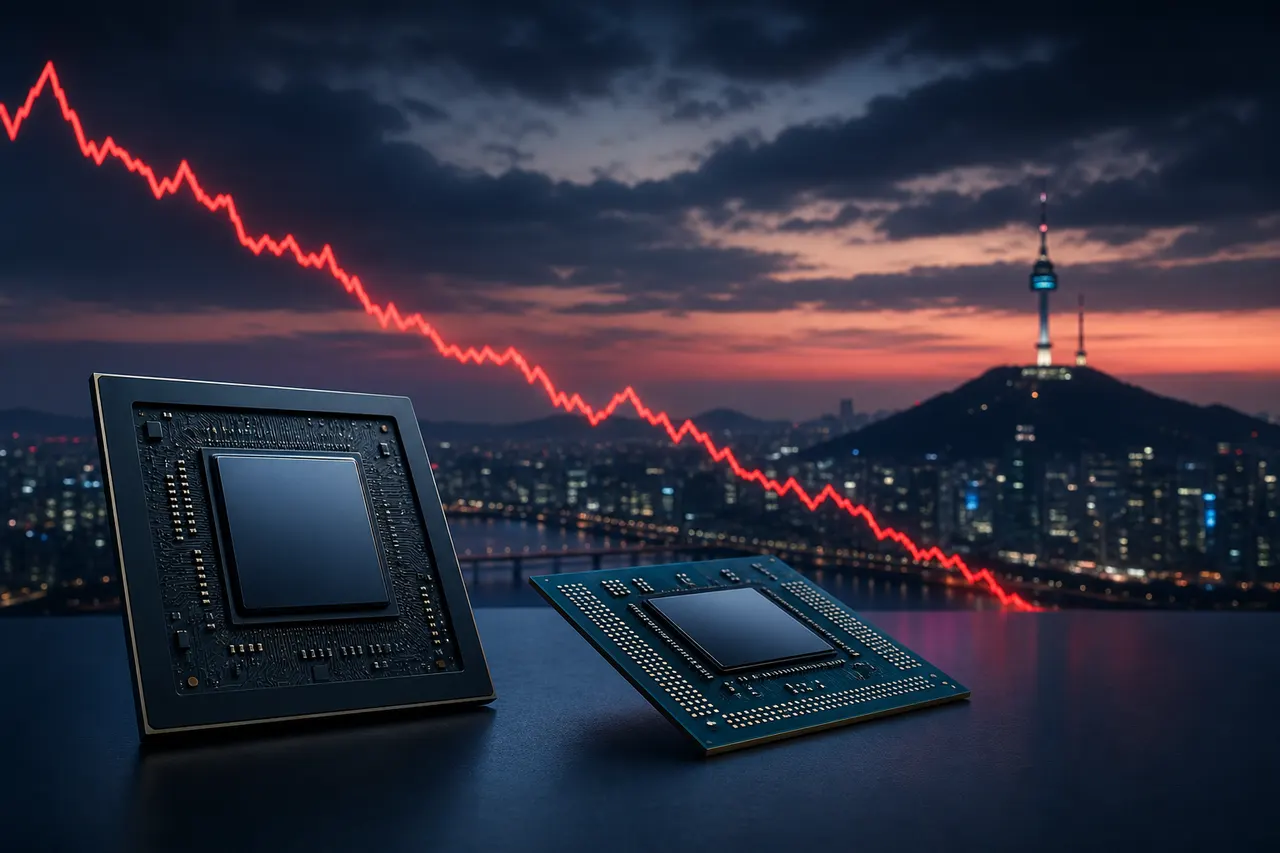
The Kospi closes Monday 3.65 percent lower at 6,384, its fourth straight decline. Samsung and SK hynix lose more than 4 percent despite record earnings. Fresh doubts about the AI boom after OpenAI reports drive the selling.
Key Takeaways
- The Kospi sheds 3.65 percent to close at 6,384, its fourth straight losing session.
- Renewed doubts about the AI boom after OpenAI reports hit Samsung and SK hynix hardest.
- ASML and TSMC report this week and could turn the mood.
Look at Asia on Monday and the picture is split: Hong Kong, Sydney and Singapore rise, while Seoul and Taipei fall. The Kospi, South Korea's benchmark index, loses 241.69 points to land at 6,384.24. That leaves it 8.85 percent lower since October 6, despite the record profit Samsung Electronics posted last week.
Chip stocks send Seoul tumbling
Samsung Electronics gives up 4.39 percent and SK hynix 4.52 percent. The tech-heavy Kosdaq fares even worse, down 4.83 percent at 849.19. According to The Korea Times, it is the biggest one-day loss since September 2, when the Kospi fell nearly 4 percent. The 7,000, 6,500 and 6,400 levels gave way one after another over the past days. The won still firms slightly to 1,335.1 per dollar while foreign investors keep selling equities.
Euronews points to a second hotspot: in Taipei, too, chip names such as TSMC weigh on the market. Tokyo is closed for a holiday. With oil easing at the same time, it looks like a sector question is being worked out rather than a broad flight from risk assets.
The spark comes from the US
Analyst Kim Seok-hwan of Mirae Asset Securities attributes the selling to a revived fear of an AI bubble. The starting point was reports that OpenAI's annual revenue sits $20 billion below earlier figures. The Nasdaq Composite fell 1.25 percent in response and regained 0.64 percent the next day. Kim stresses, however, that the gap stems from different accounting methods rather than weaker business, and that the OpenAI news explains the selloff only in part.
Lee Jae-won of Yuanta Securities describes why Korea is so sensitive: earnings growth on its exchange depends heavily on memory chips, while American industry leaders stand on several legs, from AI services to infrastructure. He advises against reading the performance gap as lost competitiveness. Investors should instead watch portfolio rotation, relative valuations and earnings expectations.
Calmer conditions prevail at the major exchanges. According to Finanzmarktwelt, Germany's DAX (the country's main blue-chip index) climbed 1.13 percent to 25,087 on Friday, and the US indices sit close to their highs. Tailwind comes from Donald Trump's announcement of an energy ceasefire between Russia and Ukraine; Brent falls to around $103. Moscow had not yet confirmed the arrangement, per Euronews.
What momentum says
TSMC serves as the stand-in for the industry. Its ADR (TSM) traded at $453.31 at the time of the snapshot on Monday morning. Momentum signals a bullish state on the daily and weekly views; there is no data for 1h and 4h. TSMC's trend is therefore still pointing up, even as selling pressure in Seoul points the other way.
Scenarios
If ASML and TSMC impress this week, worries about AI demand should ease. The Korea Times considers a Kospi recovery possible in that case, with the next hurdle at roughly 6,500.
If foreign selling continues, the 6,384 level moves into focus. If it breaks, the downward move since October 6 extends.
If US banks deliver solid numbers starting Tuesday and September inflation does not rise above the expected 3.7 percent on Wednesday, the overall market backdrop stays supportive. For Korea, SK hynix on October 27 and Samsung's earnings call on October 29 also matter.
Sources
- Euronews · euronews.com
- The Korea Times · koreatimes.co.kr
- Finanzmarktwelt · finanzmarktwelt.de