FinCEN scraps self-custody wallet and mixer rules
FinCEN has withdrawn its 2020 proposal to report transfers above $10,000 to self-hosted wallets, along with a 2023 mixer plan. BTC trades near $85,680, below resistance at $87,000.
Key Takeaways
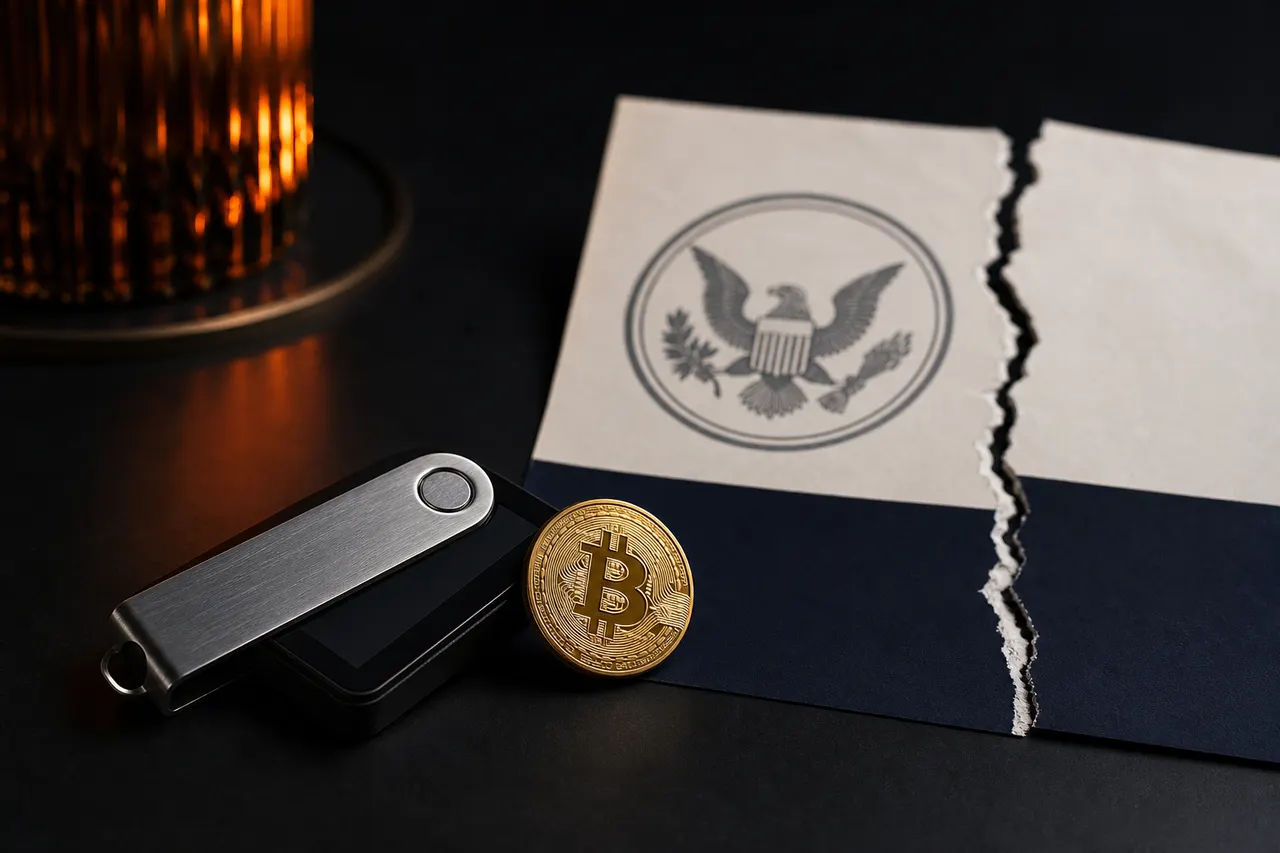
- Washington has scrapped two crypto surveillance plans: a 2020 wallet rule and a 2023 mixer rule.
- Self-custody users no longer face the feared identity checks on larger withdrawals.
- BTC trades near $85,680, just below resistance at $87,000.
Two regulatory proposals that have worried crypto users for years no longer exist. FinCEN, the financial crimes unit of the U.S. Treasury, has pulled them from the rulemaking process, and one dates back to December 2020. The market reaction has been muted so far: BTC is moving sideways, and the news matters more politically than for price.
What self-custody users no longer have to fear
At its core, the question was how much the state should be involved when someone sends funds to their own wallet. The draft would have obliged U.S. banks and crypto service providers to report any transfer above $10,000 to a self-hosted address, and the sender would have had to be identified. Even smaller amounts from $3,000 would have been documented, including details on the counterparty. Split transfers within a single day would have been added together.
That is exactly what the industry objected to. Institutions know their customers, but not the person behind an external address. Privacy concerns and compliance costs added to the pushback. According to The Crypto Times, more than 7,500 public comments were filed on the original proposal, and despite the volume of attention it never became binding law. As BTC-ECHO notes, the paper sat on ice for almost six years before the agency formally buried it.
The second casualty: the fight against mixers
In parallel, FinCEN dropped a proposal from October 2023. It targeted mixing services, platforms that pool payments from many users and thereby blur the trail of the coins. The agency had cited money laundering and use by criminal groups at the time. Both documents were signed by Deputy Director Jimmy L. Kirby and were made available for public inspection on October 5.
Context: a change of course with a rationale
FinCEN points to the report of the President's Working Group on Digital Asset Markets as its reason. The administration wants future rules to actually serve their purpose. The Bank Secrecy Act, the U.S. anti-money-laundering law, remains fully in force, as The Crypto Times stresses. Anyone buying or selling crypto is therefore still subject to the usual checks. Only the special regime for self-custody and mixers is gone.
For traders, the signal is what counts. Policymakers are moving away from blanket measures while drawing new guardrails around leveraged products. That fits a market that wants rules, but not dragnet surveillance.
What momentum says
The momentum signals a split picture for BTC at $85,679.99 (snapshot from October 6). The 1h state is bearish and the 4h state neutral. On the daily (1D) and weekly (1W) charts, the state remains bullish. In the short term, the market lacks drive, while the larger trend points upward.
Scenarios
If BTC breaks above $87,000, where the price has now stalled for the third time according to CoinDesk, the September high near $88,000 comes within reach. Yahoo Finance points out that many short positions sit there, and covering them could accelerate a breakout.
If the price is rejected once more, the sideways phase below $87,000 continues, and the bearish 1h signal could spill over into higher timeframes.
The regulatory retreat alone will not power a rally. But it reduces a political risk for self-custody and thus supports the long-term picture more than the short-term trading setup.
Sources
- BTC-ECHO · btc-echo.de
- The Crypto Times · cryptotimes.io