US chip license rule hits China AI stocks
The US wants to license AI chip sales to data centers in five countries. China's cloud and AI stocks drop sharply, with the Hang Seng Tech down 2.3 percent. Chinese chipmakers rally while investors eye Nvidia's earnings.
Key Takeaways
- Washington will require licenses for AI chip shipments to data centers in five emerging markets.
- The Hang Seng Tech Index falls 2.3 percent, and Baidu drops as much as 6.6 percent.
- Chinese chipmakers gain: Hua Hong jumps 12 percent.
China's tech market is paying the bill for the Nvidia fallout. On Tuesday the Hang Seng Tech Index gives up 2.3 percent. The trigger is a draft rule from Washington meant to close the loophole of renting computing power abroad. At the same time, investors worldwide are looking ahead to Nvidia's earnings this evening.
The cloud detour is about to be closed
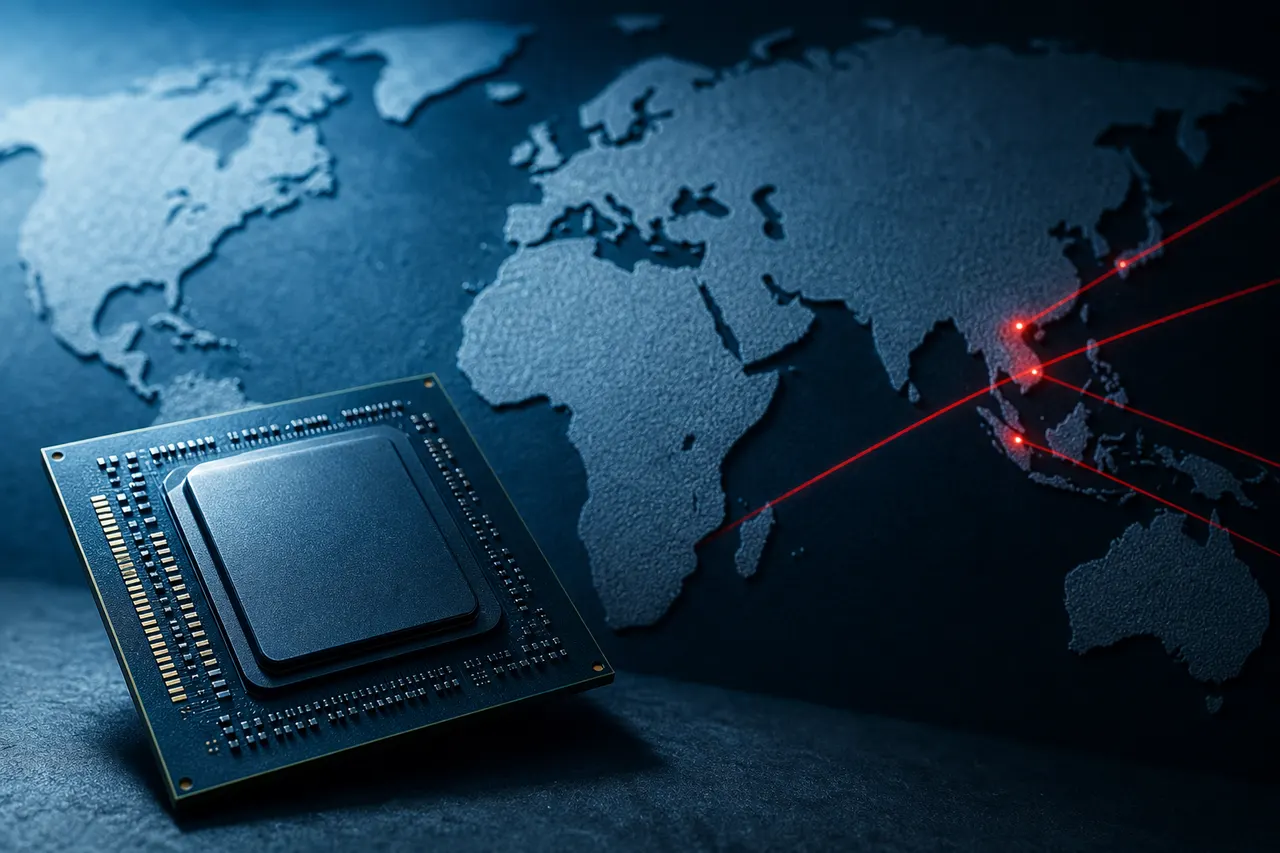
Until now, Chinese groups could not buy top-end chips directly, but they could rent computing power from providers abroad. The US Commerce Department wants to shut exactly that gap. According to Finanzmarktwelt, citing Bloomberg, operators in Singapore, Malaysia, Thailand, Indonesia and Brazil would need a US license to buy high-performance chips from American makers. Each application would be reviewed individually.
The department argues that remote access should be treated like a physical purchase. US-headquartered firms and data centers serving recommendation systems for retailers or social networks are exempt. The draft takes effect only once it is published in the Federal Register, which had not happened by Monday morning.
Politically, the tightening follows Jensen Huang's exit as Nvidia CEO. He admitted a relationship with a former manager of Singapore-based Megaspeed International, whom the US suspects of spying for China. Megaspeed denies any wrongdoing, but an export-control investigation into the company is under way. Commerce Secretary Howard Lutnick has been under fire since, and Treasury Secretary Scott Bessent has pointed the finger at him.
Who loses on the stock market and who wins
China's cloud and AI heavyweights take the hardest hit. Baidu slides as much as 6.6 percent and Alibaba as much as 5.6 percent. Model developers Minimax and Z.AI each lose more than 6 percent, and robotics specialist Yushu Technology falls as much as 11 percent in Shanghai. Nomura analysts Jialong Shi and Rachel Guo expect pricier computing power to slow growth at China's AI clouds.
The counter-move comes from domestic chip firms. Investors bet the restrictions will speed up the switch to Chinese technology. SMIC gains as much as 6.4 percent in Hong Kong and Hua Hong 12 percent.
The decision also reverberates outside China. Advantest loses 6.3 percent, Samsung Electronics as much as 3.3 percent, and Malaysian utility YTL Power almost 10 percent because it depends on power demand from new data centers. Saxo strategist Charu Chanana calls it a significant escalation in an already uneasy market.
Two dates that will decide sentiment now
On Tuesday evening Nvidia reports quarterly results, without the CEO who shaped its rise. On Thursday the Anthropic IPO follows. According to Finanzmarktwelt, investors might sell chip stocks to free up cash for it. The Philadelphia Semiconductor Index already lost 3.43 percent on Friday and another 4 percent on Monday. Alibaba and Tencent also report this week and must explain how they plan to cope with tighter access to computing power.
What momentum says
For Nvidia (NVDA), our snapshot records a price of $156.14. Momentum signals a bearish state on the daily timeframe and is bearish on the weekly timeframe as well. No data is available for shorter timeframes on stocks.
Sources
- Finanzmarktwelt · finanzmarktwelt.de
- Finanzmarktwelt · finanzmarktwelt.de