Super Micro Stock Sinks on $7B AI Equity Raise
Super Micro raises $7B to fund a $39B AI server backlog. The stock drops double digits as dilution now outweighs capacity that won't pay off until 2027.
Dilution Beats the Backlog
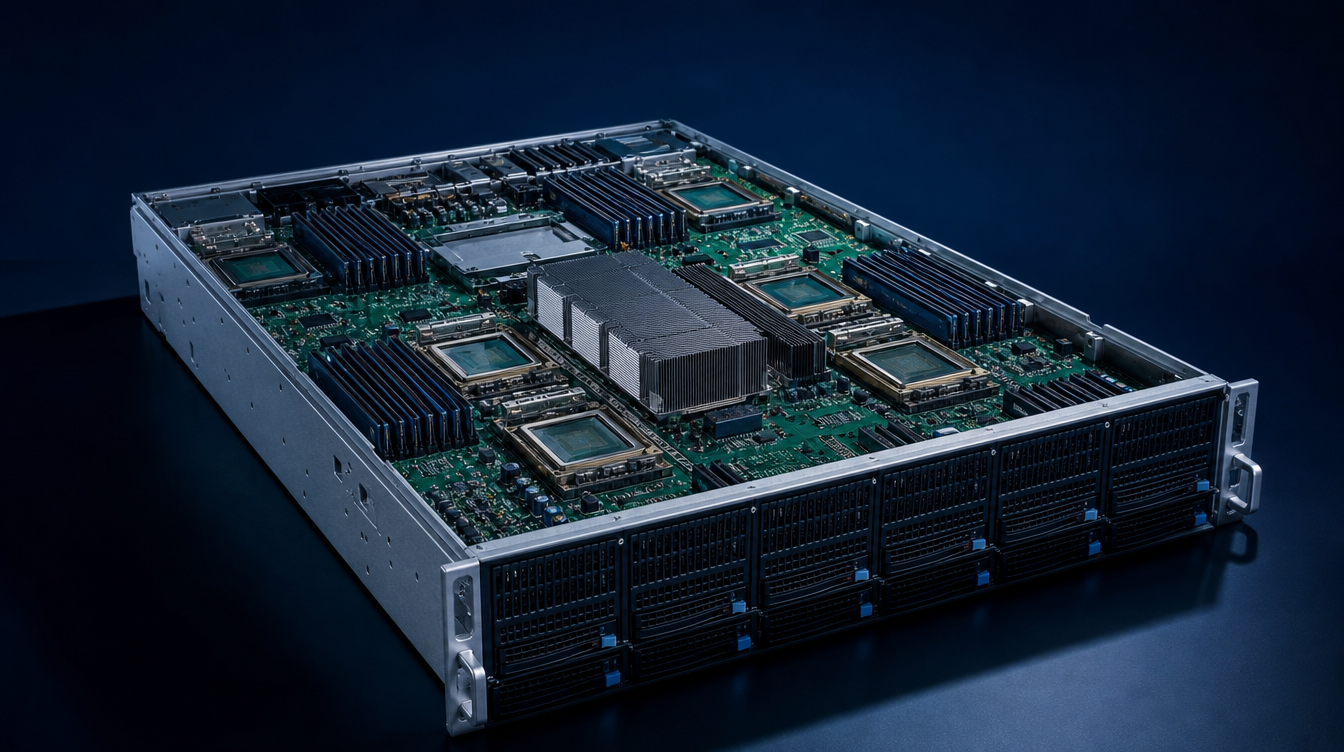
Super Micro just raised up to $7 billion in fresh capital — and the tape punished it for the trouble. The cash has one job: to fund roughly $39 billion in recently booked AI server orders, pre-paying for chips, memory and components long before the margin ever shows up. The reaction was brutal. Shares slid about 7.6% after hours Tuesday, then dropped double digits Wednesday, down nearly 20% intraday to around $32.
Why the Market Is Selling It
The raise is almost entirely equity and equity-linked — a public stock offering at $27.50 a share plus a planned $2 billion at-the-market program in Q3. That is precisely the problem. Printing new shares instead of issuing debt dilutes existing holders on day one. Earnings per share fall mechanically before a single extra server ships. For a thin-margin hardware vendor whose balance sheet is still under scrutiny after its accounting saga, it reads as a double vote of no confidence.
The AI-Hardware Trade Under Pressure
The signal runs well past Super Micro. The backlog is real — nobody disputes AI infrastructure demand. But financing that demand is becoming the bottleneck. Building AI servers means pre-funding expensive Nvidia GPUs and high-bandwidth memory well before the end customer pays. That burns cash, compresses margin and forces exactly this kind of capital raise. The market is waking up to the fact that volume growth in the AI supply chain does not automatically convert into shareholder value — and it is repricing the most leveraged beneficiaries.
What Traders Are Watching
Near term, dilution owns the narrative. Until there is clarity on how much margin survives at the end of that $39 billion pipeline, this is a show-me trade with elevated vol. The capacity being financed now does not pay off until 2027 — a long horizon in a jumpy tape.
The question is whether the order pipeline converts into durable cash generation, and whether the dilution stops here or merely opens the door to more raises. For the broader AI-hardware complex, Super Micro is a sentiment tell: if margin skepticism spreads to other suppliers, the whole trade wobbles. If Nvidia-driven demand holds, this looks more like a dilution dent than a trend break.