Russia Clears BTC, ETH and USDT for Exchange Trading
Russia's central bank opens official exchanges to Bitcoin, Ether and Tether on Sept. 1 — behind a suitability test, a ruble cap and a domestic payment ban.
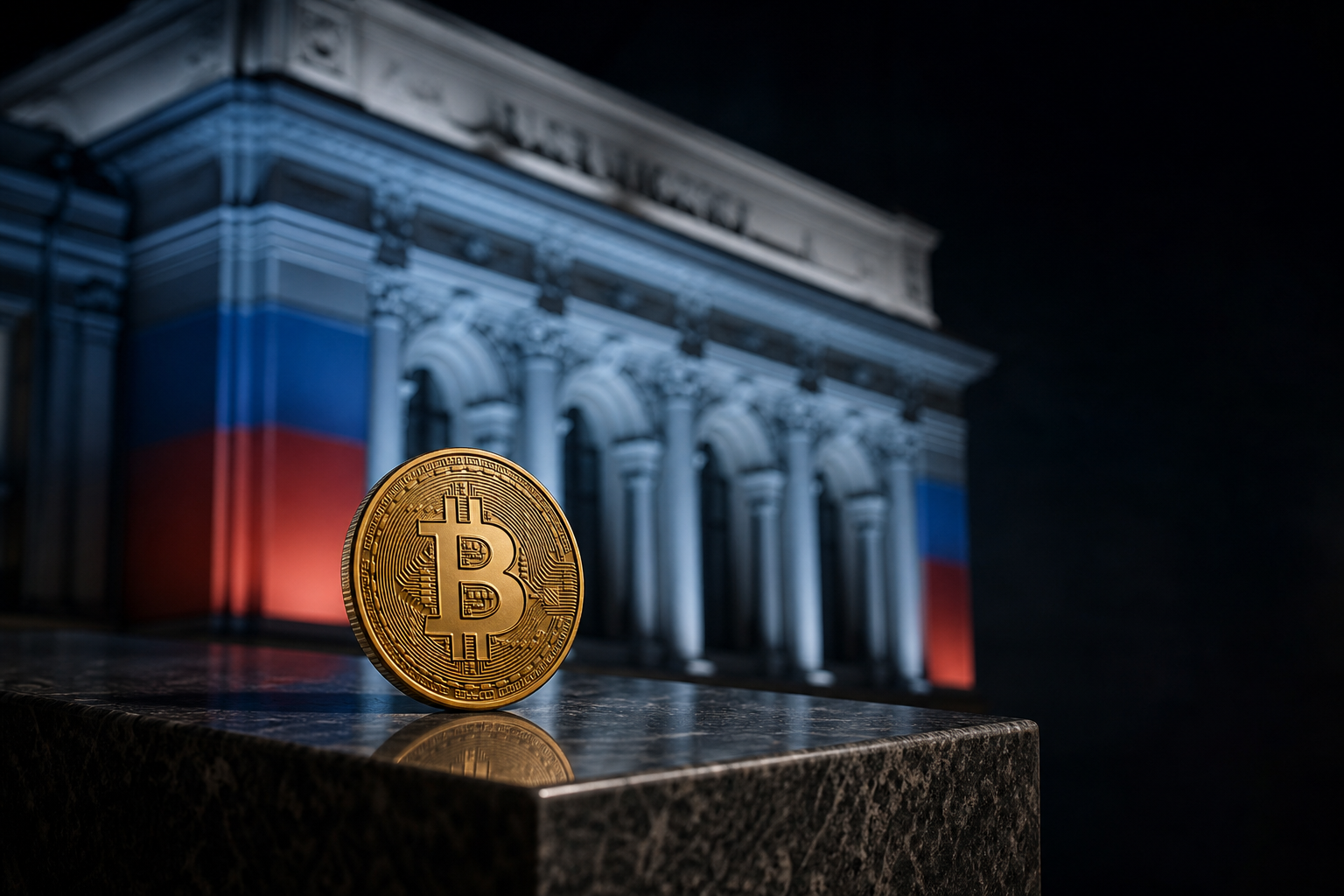
Moscow Regulates Instead of Banning
The Bank of Russia on Tuesday proposed a framework letting investors trade Bitcoin, Ether and Tether on official Russian exchanges, fleshing out a law President Vladimir Putin signed this month that legalizes crypto trading for the first time. Go-live is Sept. 1. Public comment runs only until Aug. 24, leaving regulators under two weeks to fine-tune the plumbing before launch. For the wider market, it is the furthest a G20 state has gone in formalizing assets it long merely tolerated.
A Test and a Hard Cap
Access is deliberately narrow. Both retail and professional investors must pass a suitability test before their first trade. Retail buyers are capped at 300,000 rubles, roughly $3,700, per year and per intermediary, whether that is a broker, an exchange or an asset manager. Qualified investors dodge the cap and can trade over-the-counter as well. The central bank picked exactly three assets on cold criteria: at least five years of price history on foreign venues, deep liquidity and a large market cap. Nothing else made the list.
Cross-Border Yes, Domestic No
The real tell sits inside the law. Crypto is cleared for cross-border settlement but stays banned as a means of payment inside Russia. That aims less at a retail frenzy than at a sanctions-resistant settlement rail. The obvious beneficiary is Tether: a dollar stablecoin is the natural bridge for trade that wants to route around Western banks, an irony not lost on a state that preaches de-dollarization.
The Trade
Near term, the impulse is small. The 300,000-ruble ceiling throttles retail flow, and Russian capital has sat in BTC and USDT through grey channels for years. The structural signal is what counts: a top-ten economy is moving Bitcoin, Ether and Tether onto supervised infrastructure, nudging the narrative from prohibition toward a regulated asset class and further cementing USDT as a geopolitical medium of exchange. Stablecoin-dominance bulls get another data point. For spot Bitcoin, the Western ETF and rate channel still runs the tape. The Russian venue itself is unlikely to move price: the depth of global spot and derivatives markets dwarfs the permitted volume by orders of magnitude. The real test comes in September, when it becomes clear which firms actually stand up the infrastructure and how tight the suitability gate really is. For spot Bitcoin, Wednesday's CPI print still matters more than Moscow's decree.