Russia's First Crypto Licenses: Sberbank Starts in December
Russia's central bank lists four exchanges and five custodians. Sberbank offers BTC, ETH and USDT from December, with a 300,000-ruble retail cap.
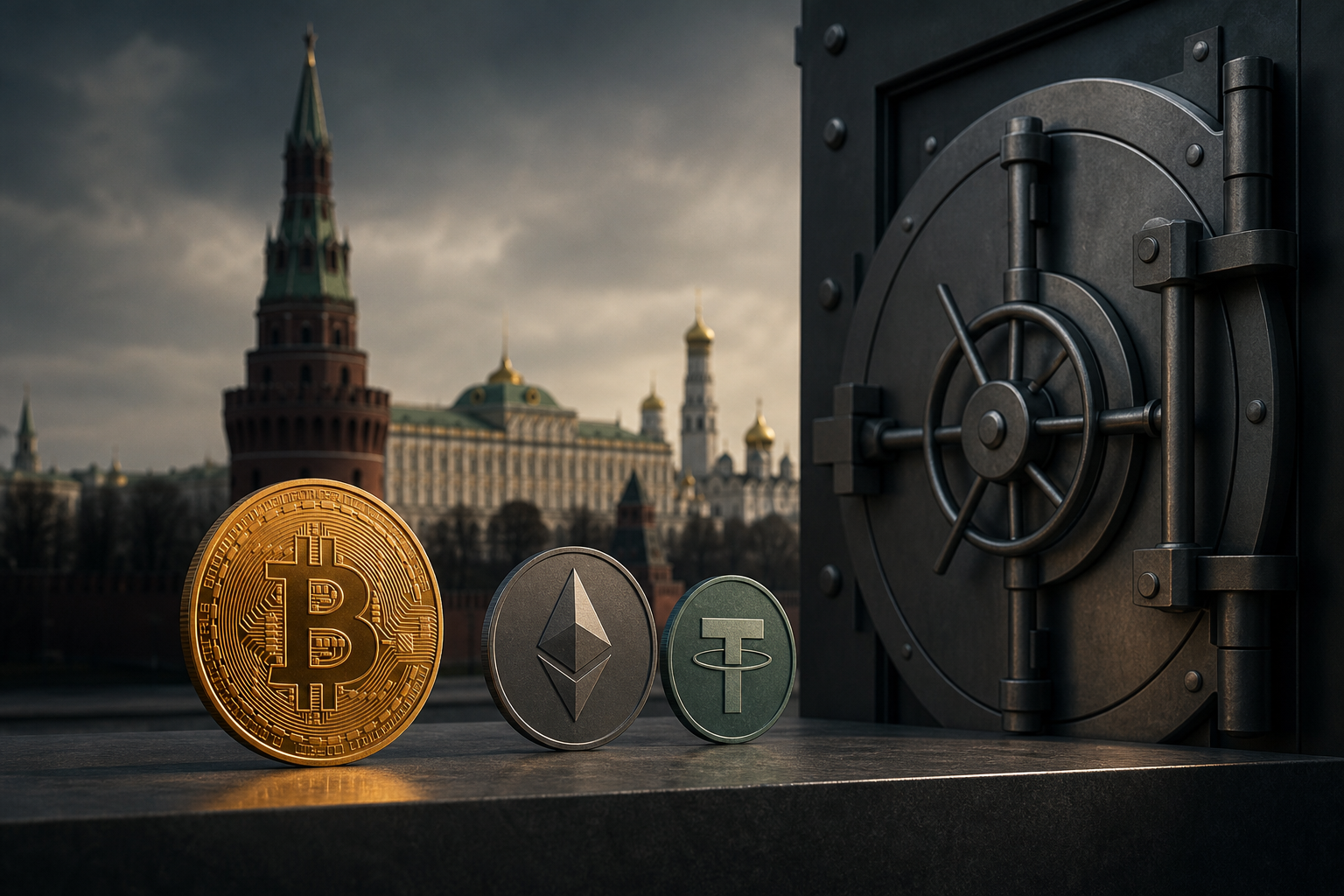
Russia Issues First Crypto Licenses: Sberbank Launches in December
Key Takeaways
- Russia's central bank lists four exchange operators and five custodians in its first crypto registers.
- Sberbank plans to offer trading and custody for BTC, ETH and USDT starting in early December.
- Retail investors may put in only up to 300,000 rubles per year per intermediary.
Of all places, Moscow is turning crypto into a regulated banking product. The central bank has published its first license registers, and Sberbank, the country's largest lender, is on the list. Bitcoin (BTC) trades around $82,900 at the same time and shows no reaction.
Who Gets to Trade Crypto in Russia
The market structure is what matters. Instead of a free-for-all, a small circle of providers is emerging: as BTC-ECHO reports, nine names appear in the registers. Four are exchange operators, five are custodians. Besides Sberbank and VTB, they include Atomyze, Voltari, Cloud Infrastructure, T-Invest Lab, Zefir and Sistema-Crypto.
Sberbank wants to deliver early. As soon as early December, its clients are supposed to be able to trade and hold Bitcoin, Ether (ETH) and the Tether (USDT) stablecoin. This follows a law Putin signed in August. It places exchanges and custodians under central bank supervision, and the registers are its first visible implementation.
Big Numbers, Little Room for Retail
The bank paints a big picture itself. Deputy chair Anatoly Popov expects regulated exchange turnover of roughly 4 trillion rubles in the first year, about $46.4 billion. For 2029, the bank cites up to $87.1 billion. That is the view of a provider that profits from growth, not an independent estimate.
Retail investors, by contrast, get little room. They can access only the most liquid coins, and the annual cap per intermediary is 300,000 rubles, roughly $3,700. Qualified investors face no cap.
In everyday life, crypto stays banned: domestic payments are still prohibited. It is permitted only for foreign trade deals between Russian and foreign partners. Moscow thus treats crypto as an asset class and trading tool, not as money.
What momentum says
Momentum signals a mixed picture for Bitcoin. In the short term it is neutral on the 1-hour timeframe and bearish on the 4-hour. On the daily it is neutral, on the weekly bullish. The broader trend therefore remains intact while selling pressure dominates in the short term. The Russian news is not yet visible in it.
Scenarios
If BTC slips durably below $82,000, pressure from the 4-hour timeframe stays decisive, and regulatory news from Russia is unlikely to support the price.
If the price holds above $83,000, the December launches at Sberbank and VTB could move into focus as an additional source of demand, although volume only counts over the course of the first year.
It remains open how many retail clients will actually max out the 300,000-ruble cap. Whether the planned volume of 4 trillion rubles is realistic depends on that.