Oil: Brent Eyes Weekly Gain Despite IEA Stock Release
Brent near $105: Hormuz attacks curb tanker traffic and IEA emergency stocks disappoint on diesel. What traders should watch.
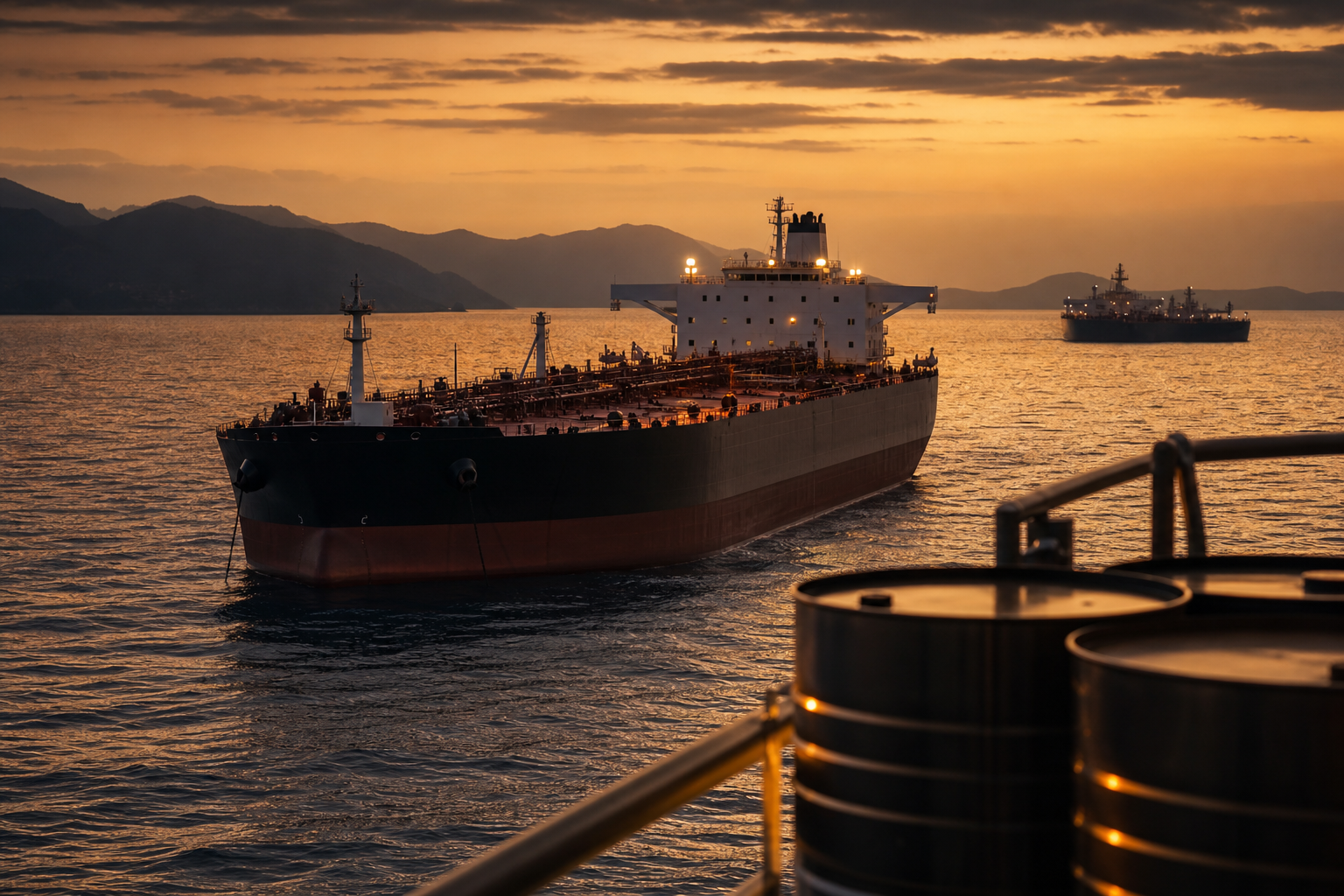
Key Takeaways
- Brent is heading for a weekly gain and trades near $105 per barrel.
- Iranian attacks are sharply reducing tanker traffic through the Strait of Hormuz.
- IEA stock releases offer only limited relief for the diesel shortage, the market's reaction suggests.
Oil is set to close the week higher even as industrialized countries release emergency stocks. Brent trades at $105.48 per barrel and WTI at $97.40. Both grades sit below their highs for the week but above last Friday's level.
Hormuz remains the price driver, and a US inventory draw adds to it
According to Irina Slav at OilPrice.com, two factors are supporting the market: continued Iranian attacks on tankers in the strait and a sizable drawdown in US stocks. US crude inventories fell by 8.56 million barrels in the week to October 9.
Shipping data shows the scale of the disruption. Kpler reports a daily average of 11.62 million barrels moving through the Strait of Hormuz in the week to October 13. On this measure the normal level is 17.15 million barrels per day, so flows run roughly a third below baseline. The figures come from a Reuters report cited by OilPrice.com.
Analysts at ING see a substantial risk premium in the price tied to the situation in the Middle East. The longer flows hold up, the more likely the market is to give some of it back. A full removal, however, would require an agreement between the US and Iran.
The IEA delivers, but traders wanted more diesel
Since the Hormuz crisis began in March, IEA members have released about 330 million barrels from emergency reserves, per OilPrice.com. The pledge was 400 million. Roughly 100 million barrels are still outstanding. The agency is now pulling forward more than 20 million barrels of diesel and speeding up the remaining deliveries.
That fell short of expectations. Up to 50 million barrels of diesel had been under discussion. European gasoil prices rose after the announcement, pointing to disappointed hopes. Diesel remains the bottleneck: refineries in the Middle East are offline and Russia is supplying less fuel. Washington is pushing for more, since diesel prices sit near record levels ahead of the US midterm elections on November 3.
President Trump's idea of easing sanctions on some shadow-fleet tankers has also made little impression. ING doubts it would free up extra tonnage, since these ships are already sailing. EU sanctions also remain in place, which complicates insurance.
What momentum says
Momentum shows a mixed picture for WTI. On the hourly (1h) and daily (1D) timeframes it reads neutral. On the 4-hour chart and the weekly (1W) chart it is bullish. The broader uptrend is intact, but short-term drive is missing.
Scenarios
If tanker traffic through Hormuz stays at the current level of 11.62 million barrels a day, a lasting risk premium looks likely, and Brent stays in the zone around $105.
If the US and Iran reach an agreement, ING says the premium could largely melt away. A decline in both grades would then be likely, with WTI needing to defend the $97 mark.
For traders, the takeaway is that stock releases do not set the direction; news from the strait does. Diesel shortages remain an inflation risk.