Kospi Crash: Warning Sign for the S&P 500 AI Rally
Kospi down 40% in June: credit, concentration and rates also threaten Wall Street. What investors should watch now.
Key Takeaways
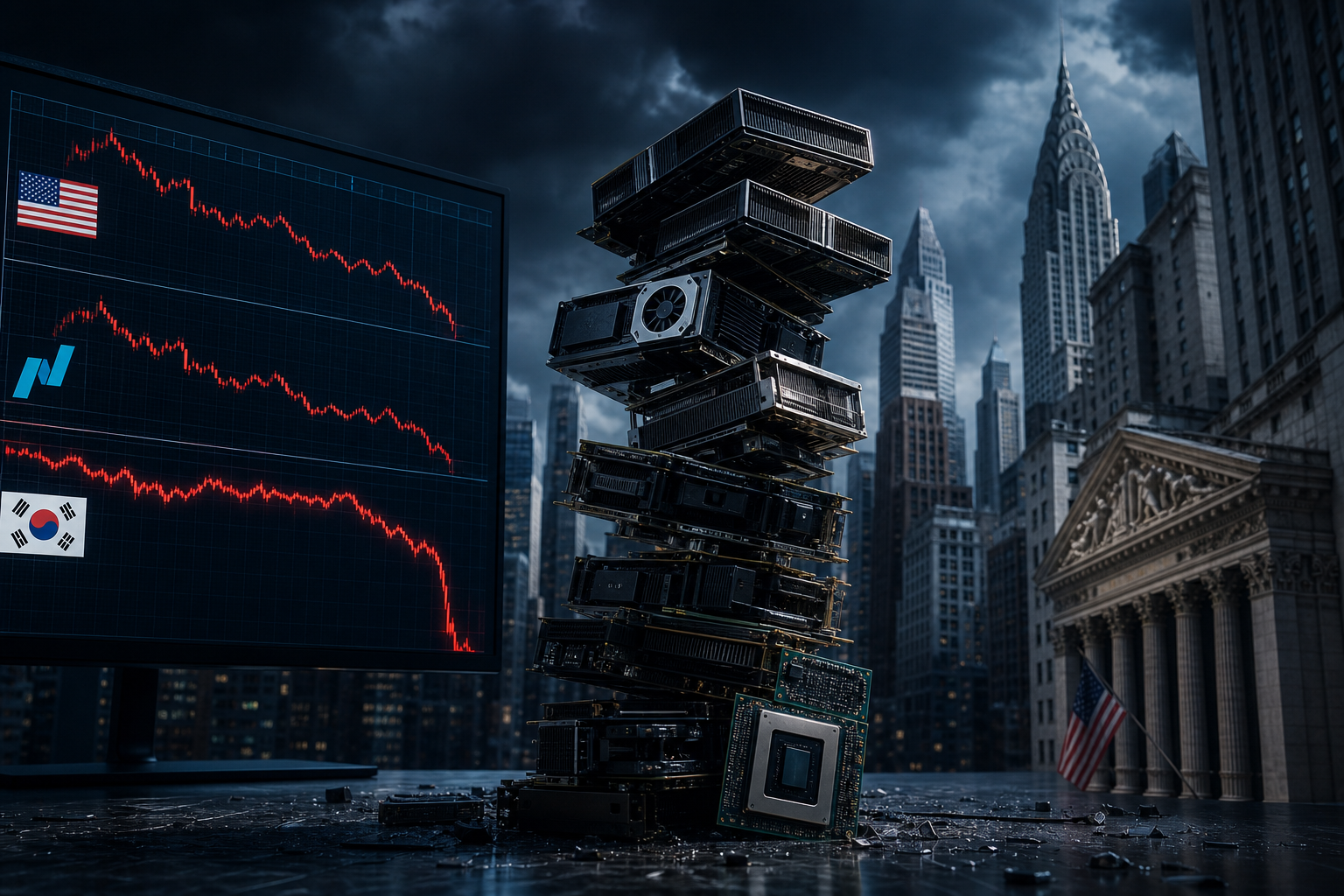
- South Korea's benchmark index lost more than 40 percent in June, driven by borrowed money.
- The U.S. market shows similar traits: high margin debt and ten giants making up about 40 percent of the S&P 500.
- Stocks cheer the PCE figures, but bonds and gold remain skeptical.
Rising rates, heavy debt and a single growth story: that combination forced South Korea's stock market to its knees this summer. On Wednesday Wall Street cheers softer inflation data, yet the question remains whether the S&P 500 faces a similar pattern.
Start with interest rates
What triggered the slump in Seoul? According to Bravos Research, as picked up by Stefan Jäger at Finanzmarktwelt, it was not a broken AI story but financing. Once policy rates rise, every leveraged position gets more expensive. Foreign professionals unloaded holdings, while domestic investors with heavy debt came under pressure. Good earnings alone no longer carry a market at that point.
The numbers: in June the Kospi plunged more than 40 percent within days, mainly because of Samsung and SK Hynix, which supply memory chips for AI data centers. Foreign institutions sold about $7.3 billion of shares in August, the seventh straight month of net selling. Securities loans climbed from under 10 trillion won in 2020 to nearly 40 trillion won.
How leverage becomes an avalanche
The mechanism is simple. When prices rise, debt multiplies returns. When they fall, the broker demands more collateral via a margin call. Those who cannot pay have to sell, which pushes prices lower and triggers new calls. A pullback turns into a chain reaction.
Does it carry over to New York?
Bravos Research puts U.S. margin debt at roughly $1.4 trillion, plus options and leveraged ETFs. The ten largest stocks make up about 40 percent of the S&P 500, and many depend on the AI theme. More Fed rate hikes could test this construction.
The pattern is not new: before the dotcom bubble and before the 2022 bear market, the Kospi slid earlier than U.S. indices. The analysis does not derive a reliable timetable from that. The U.S. trend is still considered intact, with the key moving averages mostly pointing up.
Wednesday: a rally with a question mark
August core PCE came in at 3.0 percent year over year, below the expected 3.3 percent; stocks and futures rose. Markus Fugmann at Finanzmarktwelt points out, however, that a new methodology for three components, including memory chips and portfolio management, pushes the annual figure lower. By evening, yields stood above their pre-release level and gold below it. The bond and metals markets are not buying the relief.
What investors can take from this
The Kospi is not a countdown but an early-warning system. Three things deserve a look: Are credit volumes still growing? Does the rally broaden beyond the ten giants? And how do yields react to the next Fed signals? If financing dries up, strong quarterly results may no longer be enough.