J.P. Morgan Moves Fed Hike Call to December 2026
After Warsh's hawkish inflation stance, J.P. Morgan pulled its Fed rate hike forward to December 2026. What it means for Bitcoin, gold and the dollar.
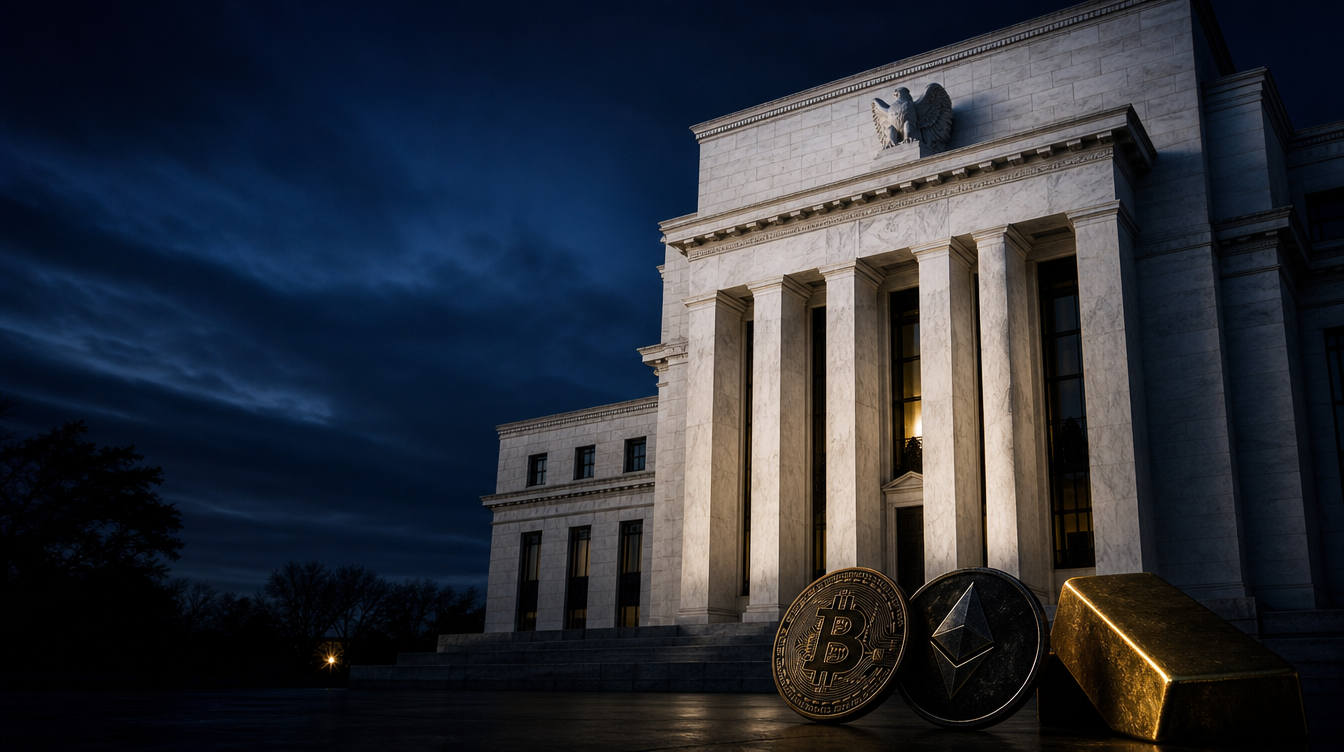
The Bank Blinks First
J.P. Morgan tore up its Fed call within hours of Kevin Warsh's press conference. Chief U.S. economist Michael Feroli now sees a 25-basis-point hike in December — a move his team had penciled in no earlier than the second half of 2027. That is not a tweak. It pulls the tightening timeline forward by more than a year.
The trigger was the new chair himself. Warsh left the funds rate at 3.75%-4.00% but ruled out any tolerance for inflation: prices are too high, and the Fed is charting a new course. Feroli reads the language as a threat, not reassurance.
Style Over Substance
The economist barely hides his skepticism. It is hard to know what to make of Warsh's remarks, he wrote — plenty of well-turned phrases, little in the way of a coherent macro view. That ambiguity, J.P. Morgan argues, dents the chair's credibility to actually deliver lower inflation, and raises the urgency for the rest of the committee to act on the price-stability mandate on its own.
The backdrop makes it worse. At the July meeting, three members already dissented in favor of tightening. A committee that leans hawkish internally, paired with a chair whose credibility is in question, is a dangerous mix: the path of least resistance now points up.
That is the real risk. A Fed chair the market doesn't believe forces his own institution into harder moves than the data alone would demand.
The Tape Reprices
Futures moved fast. The odds of a September hike now sit at 65.2%, down from 81% before the statement. On a cumulative basis, the market prices an 82.7% chance that the funds rate is above today's level by the December meeting. The question is no longer if, but when.
For risk assets, that's a headwind. A hawkish Warsh bids the dollar, pulls cheap liquidity out from under Bitcoin and Ethereum, and weighs on gold, whose appeal fades as real yields climb. The risk premium is being repriced in real time: anyone positioned for quick easing has to rework the book. As long as the Fed has to defend its inflation credibility through the rate, the lid stays on speculative positioning — and crypto volatility is more likely to build into each FOMC than to bleed off.