German Bitcoin Holding Period to End in 2027
Draft bill: Germany plans to scrap the holding period for Bitcoin and Ether bought from 2027. 25% flat tax, grandfathering for older holdings.
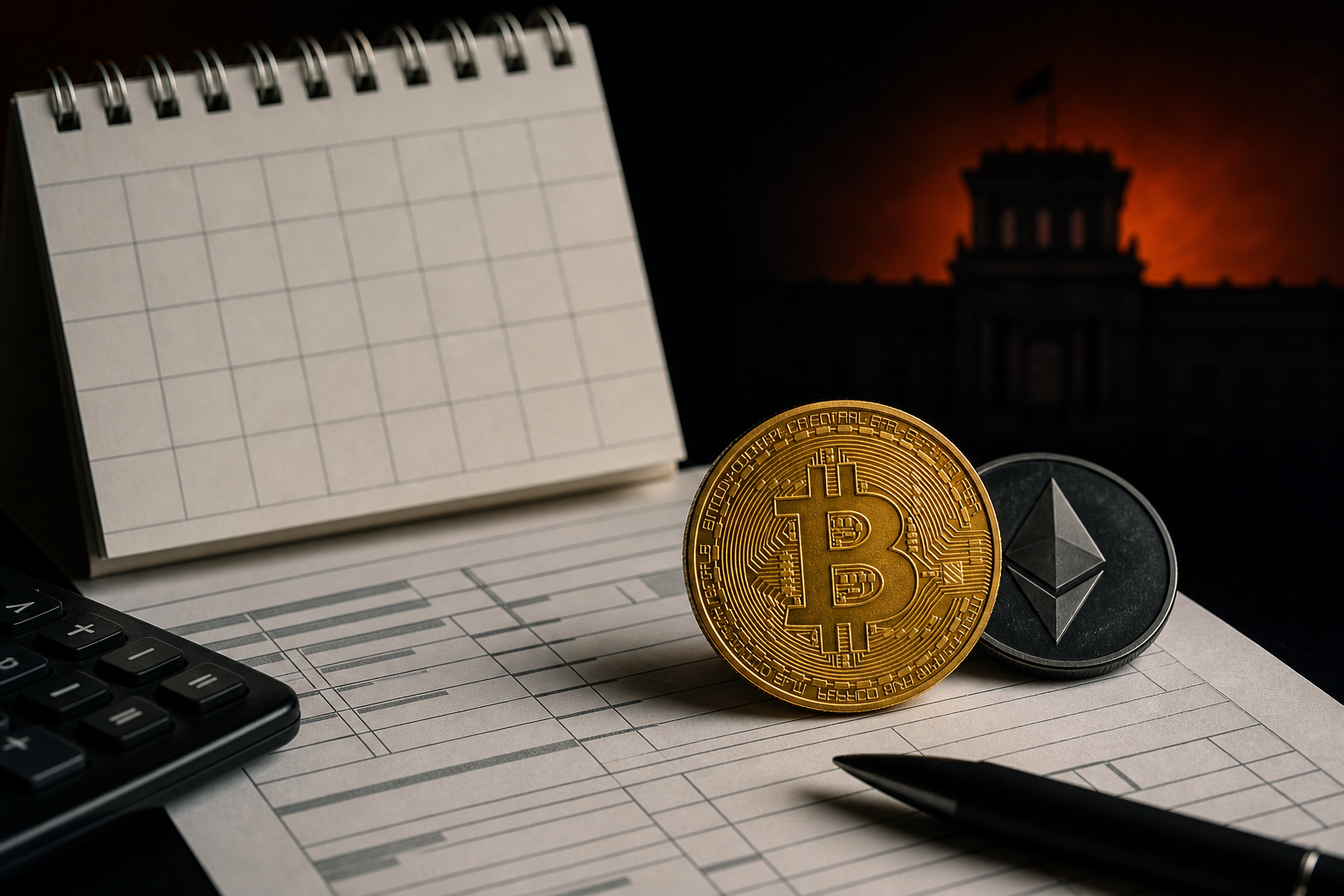
Holding-Period Ban: Berlin Wants to Tax Bitcoin Permanently From 2027
Key Takeaways
- Germany's Finance Ministry wants to scrap the one-year holding period for Bitcoin and Ether bought from 2027.
- Gains would face 25 percent flat tax plus solidarity surcharge, however long investors hold.
- From 2029, the federal government hopes for 350 million euros in extra revenue per year.
The cutoff is December 31, 2026: Anyone who buys Bitcoin after that date would never again be able to sell tax-free, even after ten years. That follows from a draft bill by the Federal Ministry of Finance, reported by BTC-ECHO. Bitcoin currently trades around $85,000, so long-term holders have a lot at stake.
Buy Before the Cutoff and Keep the Old Rules
Today's system has two tracks. Sell coins within twelve months and you pay income tax on the gain. Wait longer and you pay nothing. The draft from Finance Minister Lars Klingbeil (SPD) closes that second path for new purchases. In its place comes the 25 percent flat withholding tax plus solidarity surcharge, the same treatment as stocks and funds.
Existing holdings stay exempt. According to BTC-ECHO, coins held before the cutoff enjoy grandfathering. That creates an obvious incentive: purchases this year keep the old tax logic, purchases in January do not. How strongly investors react will only become clear in the coming weeks.
The Tax Authority Turns Exchanges Into Collection Agents
Scrapping the holding period is not the end of it. From 2028, certain providers are to calculate the tax owed themselves and transfer it to the tax office, as banks already do for securities. If the account lacks the necessary euro balance, the draft allows part of the coins to be liquidated under certain conditions.
The fiscal payoff for the state is modest. From 2029 the ministry expects roughly 350 million euros in additional revenue per year. Against that stands a considerable transition burden for platforms and administration.
What Investors Get in Return
The reform also has a milder side. As BTC-ECHO writes, citing earlier reports, losses from crypto trades would be offsettable against gains from stocks. In addition, the allowance for capital income, currently 1,000 euros a year, would also cover crypto gains. Smaller retail investors could end up better off than today.
It is all still a draft. Cabinet, the Bundestag and the Bundesrat have the final say, and resistance is already forming in the Bitcoin community.
Scenarios
If the draft passes unchanged, the cutoff is likely to become a key date for the industry: investors will check whether purchases can still be pulled forward into 2026.
If the timeline slips in the legislative process or the withholding by platforms is softened, the period of uncertainty lengthens. Planning certainty would then come late in the year.
So far the tax debate has barely touched the price. BTC-ECHO is also discussing a year-end rally toward $100,000. Should German retail investors buy less because of the tax, that would be a headwind whose size nobody can quantify today.